

How Agencies Should Plan Technical Rescue Training Programs
Effective technical rescue capability does not happen by accident. It is the result of deliberate planning, realistic training, and consistent reinforcement. Agencies that approach training as an ongoing program—rather than a series of disconnected courses—build safer, more capable teams.Start with Mission and Risk Profile
Training programs should reflect what an agency is actually likely to face. Geography, infrastructure, climate, staffing, and call history all shape risk exposure. A rope rescue program for a mountain region looks different than one for an urban environment.
Training that ignores operational reality wastes time and creates false confidence.
Define Capability, Not Just Certifications
Certifications increase competence and document completion; capability reflects performance. Agencies should define what responders must be capable of doing on scene, not just what courses they have attended.
This includes:
Required skill depth at each role
Team-level coordination expectations
Decision-making authority and thresholds
Build Progressive Skill Development
Technical rescue skills degrade without use. Training programs should progress from foundational skills to complex scenarios and revisit core competencies regularly.
Progressive training reinforces:
System fundamentals
Role discipline
Communication under stress
Adaptability to changing conditions
Integrate Scenario-Based Evaluation
Scenario-based training exposes weaknesses that drills alone cannot. Well-designed scenarios test judgment, teamwork, and leadership—not just technical ability.
Evaluation during training should focus on rescuers’ decision-making and risk management as much as mechanical proficiency.
What to Do Next
If your training plan consists of isolated courses, consider stepping back and assessing long-term capability goals. Agencies that plan training intentionally build resilient teams and reduce operational risk over time.
Training vs Experience: What Actually Builds Rescue Competence
Experience is often cited as the most valuable asset in rescue. While experience matters, it does not automatically translate to competence. Understanding how training and experience interact is key to building reliable operational performance.Why Experience Alone Isn’t Enough
Experience reinforces habits—good or bad. Without structured feedback, responders may repeat unsafe practices. Infrequent rescue events also limit experiential learning, especially for high-risk, low-frequency incidents.
The Role of Structured Training
Training provides deliberate exposure to scenarios that may never occur during routine operations. It allows teams to practice decision-making, system building, and communication without real-world consequences.
Training also standardizes expectations, language, and procedures across teams.
How Training and Experience Work Together
Experience contextualizes training. Training refines experience. The strongest teams continually cycle between both, using training to correct drift and experience to inform realism.
Scenario-based training accelerates this process by simulating operational stress and complexity.
Common Misconceptions
A common misconception is that seniority equals readiness. Another is assuming certification alone ensures competence. Both overlook skill decay, evolving best practices, and changing environments.
What to Do Next
Evaluate whether your organization relies too heavily on experience without reinforcement. Ongoing training that challenges assumptions and refreshes decision-making builds true operational competence.
When Not to Enter the Water: Risk Thresholds in Swiftwater Rescue
Swiftwater rescue culture often emphasizes action. But knowing when not to enter the water is just as important as knowing how. Recognizing risk thresholds protects responders and prevents rescuer-becomes-victim scenarios.Understanding Risk Thresholds
A risk threshold is the point where hazards outweigh potential benefits. In moving water, thresholds are influenced by current speed, depth, temperature, debris load, visibility, and team capability. Crossing these thresholds without mitigation invites failure.
Indicators That Entry Is Too Risky
Uncontrolled or Obscured Hazards
Strainers, hydraulics, and submerged debris that cannot be clearly identified or mitigated significantly increase risk.
Insufficient Safety and Egress
If downstream safety is inadequate or escape routes are compromised, entry magnifies consequences of error.
Mismatch Between Conditions and Capability
Training, experience, staffing, and equipment must match conditions. Overconfidence often pushes teams beyond safe limits.
The Cost of Ignoring Thresholds
Ignoring risk thresholds leads to near misses, injuries, and fatalities. Many rescuer fatalities occur not from lack of skill, but from entering environments where error margins are nonexistent.
Training Decision-Making for Non-Entry
Effective training normalizes non-entry decisions. Scenario-based exercises reinforce that standing down or changing tactics is a valid and professional outcome. Teams that practice restraint make better decisions under pressure.
What to Do Next
Review whether your team has clearly defined risk thresholds and decision-making frameworks. Training that emphasizes judgment—not just technique—helps responders protect themselves while still serving the mission.
Rope Rescue Team Roles: Why Clarity Prevents Failure
Rope rescue operations succeed or fail on coordination. Even well-built systems can unravel when roles are unclear, duplicated, or ignored. Clear role definition improves efficiency, communication, and safety—especially under stress.
Why Role Clarity Matters in Rope Rescue
Rope rescue involves simultaneous tasks: system management, patient care, edge operations, communications, and safety oversight. When roles are ambiguous, critical tasks are missed or performed redundantly. Clarity ensures accountability and prevents cognitive overload.
Core Rope Rescue Roles Teams Must Define
Team Leader / Operations Supervisor
Provides overall direction, prioritizes objectives, and adapts plans as conditions change. This role maintains the big picture and prevents task fixation.
Safety Officer
Monitors hazards, system integrity, personnel condition, and environmental changes. The safety officer must be empowered to intervene.
System Operators
Manage raising, lowering, and belay systems. Consistency and communication here prevent shock loading and uncontrolled movement.
Edge Attendants
Protect ropes at the edge, manage transitions, and communicate conditions between the edge and system operators.
Patient Attendant
Focuses exclusively on patient packaging, movement, and protection. Divided attention in this role increases risk.
Common Role-Related Failures
Teams often assign multiple roles to one person, creating blind spots. Another failure is assuming roles without confirmation, leading to conflicting actions. In high-stress environments, assumptions replace communication unless roles are reinforced.
Training Role Discipline
Effective training enforces role assignment and communication protocols during every scenario. Rotating roles during training builds depth while reinforcing expectations. Teams that practice disciplined role management perform more consistently under pressure.
What to Do Next
Evaluate whether your team defines and enforces rope rescue roles during training. Clear roles reduce errors, improve coordination, and increase safety—especially when operations become complex or prolonged.
Decision-Making Under Stress in Technical Rescue
Technical rescue environments are inherently stressful. Time pressure, environmental hazards, and high consequences distort perception and judgment. Understanding how stress affects decision-making is critical for preventing errors that escalate risk.
How Stress Impacts Rescuer Judgment
Stress narrows focus and reduces cognitive flexibility. Responders may fixate on a single solution, ignore contradictory information, or default to familiar habits—even when conditions demand adaptation.
These effects are normal human responses, not individual failures.
Common Decision-Making Traps in Rescue
Tunnel Vision
Teams focus on the victim and overlook secondary hazards, downstream consequences, or changes in conditions.
Action Bias
The urge to “do something” leads to premature commitment, even when waiting or repositioning would be safer.
Authority Gradient
Junior personnel may hesitate to question decisions made by senior members, allowing flawed plans to continue unchecked.
Building Better Decisions Through Training
Decision-making improves when teams train under controlled stress. Scenario-based exercises that introduce time pressure, ambiguity, and evolving conditions help responders practice recognizing cognitive traps and adapting strategies.
Training that integrates leadership, communication, and technical skills produces more resilient teams.
The Role of Leadership in Stressful Operations
Leaders set the tone for decision-making. Clear communication, deliberate pacing, and openness to input improve outcomes. Leaders who encourage reassessment reduce the impact of stress-induced errors.
What to Do Next
If training focuses only on technical skills, decision-making under stress remains unaddressed. Evaluate whether your training program deliberately challenges judgment and communication. Teams that practice thinking under pressure perform better when it matters most.
Why Most Flood Rescues Fail Before Contact Is Made
Flood rescues rarely fail because of a lack of effort. They fail because conditions overwhelm responders before meaningful contact is established. Understanding why this happens is essential for improving safety and effectiveness during flood response.
Flood Environments Are Operationally Deceptive
Murky floodwater hides hazards. Depth, current speed, and obstructions are difficult to assess visually. Urban flood environments add additional risks, including debris, contaminated water, and unstable infrastructure.
Responders who treat floodwater like normal moving water underestimate the complexity and danger involved.
Common Failure Points Before Contact
Poor Access and Egress Planning
Teams often focus on reaching the victim without adequately planning how rescuers will exit the environment safely. Experience shows time and time again, that in flood conditions, escape routes disappear quickly.
Misjudging Current and Water Force
Floodwater moves with surprising force, even in shallow areas. Responders frequently underestimate how quickly footing is lost or how fast a rescuer can be swept downstream.
Delayed or Inadequate Downstream Safety
Downstream safety is often established too late or too close to the incident site, limiting its effectiveness if something goes wrong early.
Why Equipment Alone Doesn’t Solve the Problem
Boats, ropes, and flotation devices are tools—not solutions. Without proper positioning, communication, and decision-making, equipment use can introduce new hazards. Flood rescues require disciplined coordination more than technical complexity.
Flooding often affects an entire region, limiting mutual aid options or access. THese types of events overwhelm available resources and divide teams and equipment between multiple incidents.
Training for Flood-Specific Challenges
Flood rescue training must address unique operational challenges, including access planning, situational awareness, and go/no-go decision-making. Scenario-based training exposes teams to the realities of flood response without the consequences of real-world failure.
What to Do Next
If your team rarely trains in flood-like conditions, operational readiness is limited. Evaluate whether training addresses access, egress, and decision-making before contact—not just rescue techniques. Preparation improves outcomes long before responders reach the victim.
The Role of the Safety Officer in Technical Rescue Operations
In technical rescue, safety does not happen by accident. It is managed, monitored, and enforced. The safety officer plays a critical role in maintaining situational awareness, identifying emerging hazards, and protecting rescuers from preventable risk. When this role is poorly defined—or ignored—operations degrade quickly.
What the Safety Officer Role Actually Is
While all rescuers should have full situational awareness and the authority to call a stop if they see a hazard, they can easily become task saturated. The safety officer is not an observer or an administrative position. In technical rescue, the safety officer actively monitors hazards, operations, personnel condition, and environmental changes. Their responsibility is to identify risk before it becomes an incident and to intervene when necessary.
This role requires authority, situational awareness, and the confidence to halt or redirect operations when conditions warrant.
Why Safety Oversight Fails in Rescue Operations
Many teams assign a safety officer in name only. The individual may also be performing other tasks, limiting their ability to monitor the full scene. In other cases, the role lacks authority—recommendations are ignored in favor of speed or convenience.
Another common failure is focusing only on initial hazards and not reassessing as operations evolve.
Key Responsibilities of an Effective Safety Officer
Continuous Risk Assessment
Conditions change. Water rises, anchors shift, fatigue increases. The safety officer must constantly reassess risk, not rely on initial assumptions.
Monitoring Team Performance and Fatigue
Rescue work is physically and mentally demanding. The safety officer tracks signs of fatigue, stress, and skill degradation that increase error likelihood.
Authority to Intervene
A safety officer must be empowered to stop or modify operations without hesitation. This authority must be supported by leadership and reinforced through training.
Training the Safety Officer Role
Effective training treats safety officer responsibilities as a skill set, not an assignment. Scenario-based training allows personnel to practice hazard recognition, communication, and decision-making under pressure.
When teams train this role deliberately, safety oversight becomes proactive rather than reactive.
What to Do Next
If your safety officer role exists only on paper, risk is being managed informally. Evaluate whether personnel are trained, empowered, and positioned to actively manage safety during operations. Structured training strengthens this role and improves overall team performance.
Mechanical Advantage Systems: When Simpler Is Safer
Mechanical advantage (MA) systems are a cornerstone of rope rescue. However, more pulleys and progress capture devices do not automatically improve safety. In many cases, simpler systems outperform complex ones when conditions deteriorate.
Understanding Mechanical Advantage in Rescue
Mechanical advantage allows rescuers to move heavy loads with reduced effort. Systems range from simple 2:1 setups to complex multi-directional configurations. Each additional component increases friction, setup time, and failure points and opportunity for human error.
Why Complexity Can Increase Risk
Complex systems require:
More equipment
More setup time
Higher skill levels
Greater oversight
Under stress, complexity increases the likelihood of rigging errors, miscommunication, and delayed response.
When Simple Systems Are the Better Choice
Time-Critical Operations
Simple systems deploy faster and allow teams to begin movement sooner when time is a critical factor.
Limited Staffing
While increased mechanical advantage is often needed with less people, fewer components mean fewer personnel are required to manage and monitor the system effectively.
Dynamic Environments
In unstable terrain or changing conditions, simpler systems adapt more easily and fail more predictably.
Training Implications for Rope Rescue Teams
Effective training teaches teams to select systems based on need, not habit. Scenario-based instruction in varied terrain reinforces decision-making: when to simplify, when redundancy is essential, and how to balance efficiency with safety.
What to Do Next
Review whether your team defaults to complexity without evaluating necessity. Trainings that emphasizes system selection—not just construction—builds safer, more adaptable rope rescue technicians.
River Rescue Course Comparison
We created this to help you learn which course is best based on your background and goals
Swiftwater Rescue Courses for River Runners
River Rescue vs. River Rescue Advanced
Not sure which course is right for you? Start with the fundamentals in River Rescue, or build on your experience with River Rescue Advanced.
| Category | River Rescue | River Rescue Advanced |
|---|---|---|
| Best For | Students learning rescue skills for the first time | Experienced boaters ready for more complex rescue scenarios |
| Skill Level | Beginner to Intermediate | Intermediate to Advanced |
| Primary Focus | Foundational rescue skills and river safety fundamentals | Advanced rescue application, leadership, and complex scenarios |
| Ideal Student | Recreational paddlers, private boaters, newer guides | Experienced river runners, guides, expedition leaders |
| Prerequisites | No prior rescue course required | Prior River Rescue or equivalent recommended |
| Core Skills | Self-rescue, throw bags, hydrology, river hazards, basic rope systems | Complex rescues, entrapments, advanced systems, leadership, night operations |
| Training Style | Hands-on fundamentals and practical rescue scenarios | More demanding scenarios with higher-level problem solving |
| Outcome | Build confidence and core rescue competency | Prepare to lead and manage complex river rescue situations |
Common Swiftwater Rescue Mistakes That Lead to Near Misses
Swiftwater rescue incidents are unforgiving. Mistakes compound quickly, and near misses often precede serious injuries. While environmental hazards play a role, many incidents stem from predictable human errors that training can address.
Mistake #1: Underestimating Water Force
Moving water exerts far more force than it appears to. Teams frequently misjudge current strength, especially in flood conditions where visual cues are distorted. This leads to poor positioning, ineffective safety setups, and rescuer instability.
Mistake #2: Inadequate Downstream Safety
Downstream safety is often under-resourced or poorly placed. Teams focus on the initial rescue point without fully considering where a rescuer or victim may end up if systems fail. This oversight turns recoverable errors into emergencies.
Mistake #3: Committing Before Completing Size-Up
Pressure to act quickly leads teams to enter the water before completing a full size-up. Incomplete hazard identification, poor access planning, and uncoordinated entry increase exposure dramatically.
Mistake #4: Overreliance on Equipment
Throw bags, boats, and ropes are tools—not solutions. Teams that rely on equipment without sound positioning, communication, and coordination often create new hazards rather than resolving the original problem.
How Training Reduces These Errors
Quality swiftwater training emphasizes decision-making, positioning, and judgment—not just techniques. Repetition in real water environments helps teams recognize warning signs and apply safer alternatives before mistakes escalate.
What to Do Next
If near misses are treated as isolated events rather than learning opportunities, risk persists. Evaluate whether training addresses common failure points and reinforces disciplined decision-making in dynamic water environments.
Why PPE Decisions Matter More Than Equipment Choice in Rescue
In technical rescue, discussions often focus on ropes, boats, anchors, or systems. Equipment matters—but personal protective equipment (PPE) matters more. PPE is the final barrier between a rescuer and injury, and poor PPE decisions frequently contribute to near misses and line-of-duty injuries across rescue disciplines.
What PPE Really Means in Technical Rescue
PPE includes helmets, flotation devices, harnesses, thermal protection, gloves, footwear, and eye protection. Its purpose is not comfort or convenience—it is risk mitigation. PPE must match the environment, hazards, and tasks involved in the rescue.
Using the wrong PPE, or using the right PPE incorrectly, can negate the benefits of otherwise sound rescue systems.
Why PPE Decisions Directly Affect Safety
Unlike tools that can be swapped mid-operation, PPE failures often expose rescuers immediately. Improper flotation in moving water, inadequate head protection in rope environments, or insufficient thermal protection in cold conditions can escalate minor errors into life-threatening situations.
PPE also affects performance. Poor mobility, visibility, or dexterity increases fatigue and degrades decision-making under stress.
Common PPE Mistakes in the Field
Assuming One PPE Setup Works Everywhere
Rescue environments vary dramatically. PPE suitable for ice rescue may be inappropriate for water operations or flood response. Teams that fail to adjust PPE to conditions increase exposure unnecessarily. Appropriately sizing PPE to rescuers is critical to ensure that it is providing protection without causing added risk.
Prioritizing Comfort Over Protection
Comfort matters, but protection comes first. PPE that is easier to wear but offers inadequate protection often leads to preventable injuries.
Failing to Train in Assigned PPE
Rescuers must train in the PPE they will wear operationally. Equipment unfamiliarity becomes a liability during high-stress incidents.
How Training Improves PPE Decision-Making
Effective training integrates PPE considerations into every scenario. Instead of treating PPE as a checklist item, training should reinforce why specific equipment is selected and how it affects performance. Training should include realistic deployment and donning of PPE.
Scenario-based training allows teams to experience feedback on PPE decisions in controlled environments, improving judgment and compliance in real incidents.
What to Do Next
Evaluate whether your team consistently selects PPE based on hazard assessment rather than habit. Training that reinforces PPE selection as a decision-making process—not an afterthought—will improve safety and operational effectiveness across all rescue disciplines.
Scene Size-Up in Technical Rescue: Where Most Teams Get It Wrong
Scene size-up sets the tone for every technical rescue operation. Yet it is often rushed, incomplete, or treated as a formality. In complex rescue environments, poor size-up is a leading contributor to near misses, injuries, and failed operations.
What Effective Scene Size-Up Really Involves
Technical rescue size-up goes beyond identifying the victim and hazard. It includes evaluating environmental conditions, access and egress, resource needs, team capability, and evolving risk. Size-up is not a one-time action—it is continuous throughout the operation and requires everyone to be involved.
Why Size-Up Fails in Real Incidents
One common failure point is tunnel vision. Teams focus on the victim and overlook secondary hazards or downstream consequences. Another issue is assumption—believing conditions are stable based only on prior experience rather than current observation.
Time pressure and bystander influence also degrade decision-making if not actively managed.
Key Elements Teams Commonly Miss
Environmental Change
Water levels rise, weather shifts, and structural stability degrades. Teams must anticipate how conditions may change throughout the operation, not just how they look on arrival.
Team Capability and Fatigue
Not all teams have the same skill depth or experience. Assignments must reflect actual capability, not ideal assumptions. Fatigue compounds risk, especially in prolonged operations.
Downstream and Secondary Hazards
In both rope and water rescues, where a rescuer or load may end up if something fails is just as important as the immediate work area.
Improving Size-Up Through Training
Effective training reinforces structured size-up models and encourages teams to practice decision-making under realistic conditions. Scenario-based exercises that evolve over time teach teams to reassess and adapt rather than lock into early assumptions.
Full mission profile training that integrates leadership, communication, and risk management produces better outcomes than skill-only instruction.
What to Do Next
If your team rarely revisits size-up once operations begin, it may be time to reassess your training priorities. Strong technical skills are only effective when paired with disciplined scene assessment. Investing in training that emphasizes decision-making and operational awareness improves both safety and performance.
High-Angle vs Steep-Angle Rescue: What Teams Need to Know
The terms “high-angle” and “steep-angle” are often used interchangeably in rescue conversations—but they are not the same. Understanding the difference matters. The angle of terrain directly affects system choice, team roles, and risk management during rope rescue operations.
Defining Steep-Angle and High-Angle Rescue
Steep-angle rescue generally refers to terrain where a patient or rescuer cannot easily stand or walk without assistance, but where a fall would likely be arrested by friction or terrain features. High-angle rescue involves terrain steep enough that a fall would be uncontrolled without a rope system.
This distinction influences whether rope systems are primarily used for safety and balance or for full load-bearing operations.
Why the Difference Matters Operationally
Misclassifying terrain leads to inappropriate system selection. Treating a high-angle environment as steep-angle may result in insufficient redundancy or control. Conversely, over-building systems for steep-angle terrain can slow operations and increase complexity without adding safety.
Correct classification allows teams to:
Match system complexity to actual risk
Assign appropriate roles and supervision
Maintain operational efficiency while managing exposure
System Considerations by Terrain Angle
Steep-Angle Environments
In steep-angle scenarios, systems often emphasize:
Safety lines and belays
Simple anchors
Assisted movement rather than full suspension
Personnel remain partially weight-bearing, reducing system loads.
High-Angle Environments
High-angle rescues require:
Fully redundant anchor systems
Primary and belay lines or twin tension rope systems
Controlled lowering and raising systems
Clear communication and edge management
Here, rope systems are the only thing preventing catastrophic falls.
Common Misconceptions in Rope Rescue
A frequent misconception is that terrain angle alone determines system requirements. In reality, surface composition, environmental conditions, patient packaging needs and consequences also play major roles. Another error is assuming that advanced systems automatically make operations safer; complexity increases failure points if teams are not proficient.
Training Implications for Rope Rescue Teams
Effective rope rescue training teaches teams how to evaluate terrain realistically and select systems accordingly. Scenario-based training reinforces when to simplify and when redundancy is non-negotiable. Teams that train across varied terrain in a variety of conditions develop better judgment and system discipline.
What to Do Next
If your team uses rope systems in varied environments, ensure training addresses both steep-angle and high-angle contexts. Understanding the difference improves safety, efficiency, and confidence. Regular practice in realistic terrain is essential to efficient decision making and applying correct techniques under pressure.
Reading Moving Water: A Foundational Skill for Rescue Teams
Every moving water rescue begins long before contact with a victim. It begins with reading the water. Whether responding to a river incident, urban flooding, or highwater, a team’s ability to interpret current, features, and hazards directly impacts rescuer safety and operational success. Reading moving water is not just a recreational skill—it is a core technical rescue competency.
What Does “Reading Moving Water” Mean?
Reading moving water is the process of observing and interpreting how water behaves in a given environment. This includes recognizing current speed, depth, surface features, obstacles, hazards, and hydraulic forces that influence rescue operations. For rescue teams, reading water informs size-up, risk assessment, and go/no-go decisions.
Unlike recreational paddling, rescue-focused water reading prioritizes hazard recognition and responder safety over navigation efficiency.
Why Reading Water Matters in Rescue Operations
Moving water environments are dynamic and unforgiving. What appears manageable from shore may conceal hazards that overwhelm personnel once committed. Misjudging current strength, hydraulic features, or channel constrictions can quickly place rescuers at risk.
Teams that read water effectively are better able to:
Identify safe access and egress points
Predict how a victim or rescuer will move once in the current
Position downstream safety appropriately
Decide when rescue is feasible—and when it is not
Key Features Rescue Teams Must Recognize
Current Speed and Direction
Surface velocity does not always reflect subsurface flow. Faster, deeper water often appears smooth and dark, while slower, shallow water shows texture. Understanding how current accelerates around bends, constrictions, and obstacles is critical for positioning personnel.
Hydraulics and Recirculating Features
Low-head dams, pour-overs, and submerged obstacles can create recirculating currents that trap victims and rescuers. These features are often underestimated, especially at night in flood conditions when visual cues are obscured.
Strainers and Obstructions
Vegetation, debris piles, bridge pilings, and fences can act as strainers—allowing water through while trapping solid objects. Strainers are among the most lethal hazards in moving water rescue and must be identified early in the size-up.
Common Mistakes Teams Make When Reading Water
One of the most common errors is assuming familiarity with the area equals safety. Rivers and drainage systems change constantly due to weather, seasonal flows, and debris movement. Another frequent mistake is focusing only on the victim and not the downstream environment where rescuers may end up if things go wrong.
Teams also tend to underestimate how quickly conditions deteriorate during flood events, especially in urban settings.
How Training Develops This Skill
Reading moving water is not learned from videos and diagrams alone. It requires guided observation, repetition, and on and in-water exposure to real environments under controlled conditions. Effective training helps responders connect water features to operational decisions—where to place safety, where not to enter, and how to adapt tactics to conditions.
Courses that emphasize live in-water environments and scenario-based learning accelerate this skill development and improve on-scene judgment. Opportunities to float and run rivers with focused drills provides feedback and familiarity with moving water, limitations, and capabilities.
What to Do Next
If your team operates in or around moving water, the ability to read water should be treated as a core safety skill. Evaluate how often your personnel practice this skill and whether training occurs in environments similar to your response area. Purpose-built swiftwater and river rescue training helps teams build confidence, competence, and safer decision-making in real conditions.
PFD’s / Life Jackets for Law Enforcement First Responders
Here are a couple of thoughts and options you could consider:
General PFD thoughts:
More floatation is not necessarily better. The way the flotation is situated on the jacket changes how you sit in the water and how much maneuverability you have for swimming and moving around.
Many PFD's that you put on over the head need to have the side straps loosened each time you take them off and must be re-tightend each time you put it back on.
PFD's with a front entry can be adjusted to the individual and then taken off and put on without major readjusting of side straps.
PFD’s with side entry are a combo of these two, open from the side, put your head through the shoulder straps and then buckle the side straps around your torso. Similar to a front entry PFD, these can be primarily adjusted to the individual just once.
Whitewater jackets:
These are simple jackets suitable for traveling by boat, swimming and rescue in flat, moving and swiftwater.
Pros:
Typically simple, fast and easy to put on.
They do not have extra belts and buckles to do up before use
They can have pockets if wanted or can be clean with no pockets
Those with universal fit work for most everyone 90lbs and up OR if sized, generally each size fits a wider range of officers
Less expensive
Cons:
There is no way to attach a rope to the rescuer for advanced skills, however these skills require more training and at least one other trained rescuer.
Compare Specs for all three of these here INSERT Screen Shot?
Side entry and do up buckles on the side
Pocket in front
Could probably rig up a way to carry duty weapon if traveling by boat (see astral green jacket notes below)
front entry, zipper and buckle
pockets
velcro/molle panel
Front entry, with 4 buckles
Has a head pillow
no pockets
one size fits all, 90lbs and up
This is what most of the outfitters use for adults
Rescue Jackets:
This is the type a rescue team will use.
Pros:
Releasable attachment point to allow for tethered rescue and swimming lines across channels
pockets for equipment storage
Cons:
Expensive
More of a person specific fit
More things to do up when putting it on.
Comparison of the these Rescue Jackets specs
Over the head to put it on and then tighten side straps and do up rescue belt buckle
Big pocket in the front
WYGF uses this type and is able to carry duty weapon behind front chest floatation like a chest rig
Put it on like a jacket, have to do up zipper, buckles, and rescue belt buckle.
Lots of floatation (keeps your head well out of the water when floating or swimming)
Molle connection points and velcro for patches on front
____________________________________________________________________________
Overall if rescue is not your primary focus but is part of your agencies fast initial response, and you are responding as a single person resource, we would recommend:
The Big Water Guide for its ability to add a radio holster, having a pocket to cary simple Medical BSI, and its ease to put on in stressful situation.
The Big Water V for its universal, one size fits all and it is simple and fast putting to put on under stress.
Black Fox Rescue would be happy to supply you with a quote on these and other rescue items. Feel free to contact us with further questions about rescue euipment, skills, or training.
2026 River Rescue Swiftwater Rescue Courses for River Runners and Guides
Black Fox Rescue Offers courses in Wyoming and Montana and Eastern Idaho. Here are the 2026 River Rescue and River Rescue Advanced Swiftwater Rescue Courses
River Rescue (Swiftwater Rec 1/ ACA Level 3 Equivalent)
16 hour course taught over 2 days
March 28, 2026 with Taylor Carlin in Missoula MT
April 27, 2026 with KC Bess in Jackson WY
May 9, 2026 with Orion Hatch in Jackson WY
May 14, 2026 with KC Bess in Jackson WY
May 16, 2026 with Orion Hatch in Jackson WY
June 4, 2026 with KC Bess in Jackson WY
July 9, 2026 with Linsey Nunnes in Jackson WY

River Rescue provides guides and river runners the foundational swiftwater rescue skills and mindset to self rescue and avoid accidents when boating on rivers.
River Rescue Advanced(Swiftwater Rec Pro/ ACA Level 4 Equivalent)
16-18 hour course taught over 2 days (+ night scenario)
May 12, 2026 with KC Bess in Jackson WY
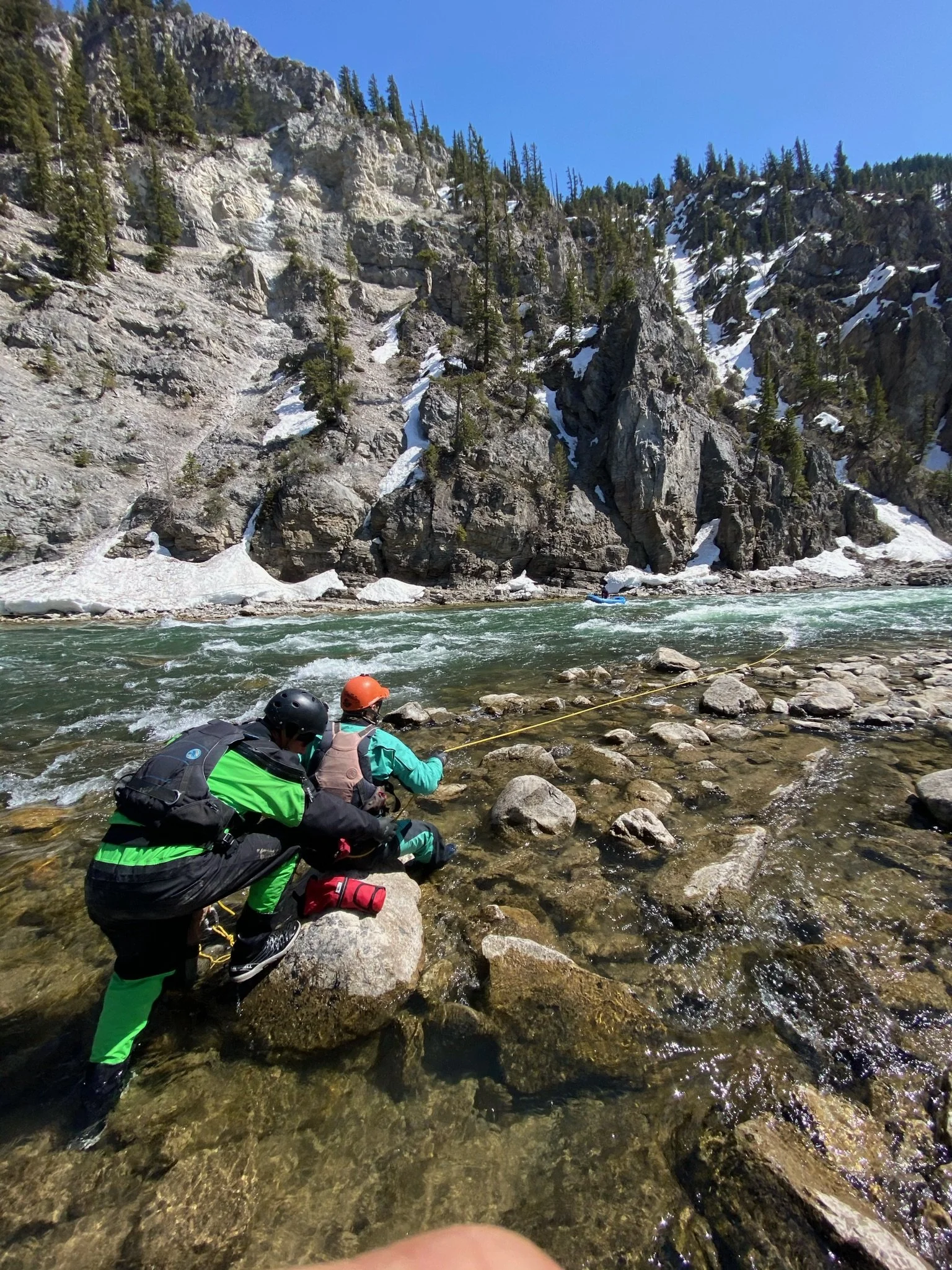
River Rescue Advanced Courses build on foundational skills taught in River Rescue to gives guides and experienced river runners stronger swiftwater rescue skills and improve decision making and risk management.
Swiftwater Gear: Screw-gate vs. auto locking carabiners
For the river locking carabiners are safer than non locking carabiners. Non lockers have the potential to accidentally clip on to and entrap people. This brings up the question of what type of locking carabiners are better for the river.

Screw gates have the advantage of being able to be left unlocked when stored in a pocket. This makes it easier to pull out and clip something with out fumbling with the locking gate. But as a trade off this means there is the possibility that they could be left unlocked and if stored on the outside of a pfd or used for rigging equipment can make the entrapment risk similar to that of a non locking carabiner.
Auto locking carabiners reduce the unlocked entrapment hazard but can be difficult to operate in a hurry with cold wet hands. They can also be slightly more prone to getting fouled up by dirt and mud resulting in a stuck gate that will either not open or close or properly lock.
Knot or Not: Should you have a knot in the end of your throwbag?
Throw bag knots
The debate about whether or not to put a knot on the working end of the throwbag line has been going on for decades. The discussion is ultimately yours and so it helps to understand both sides of the debate.
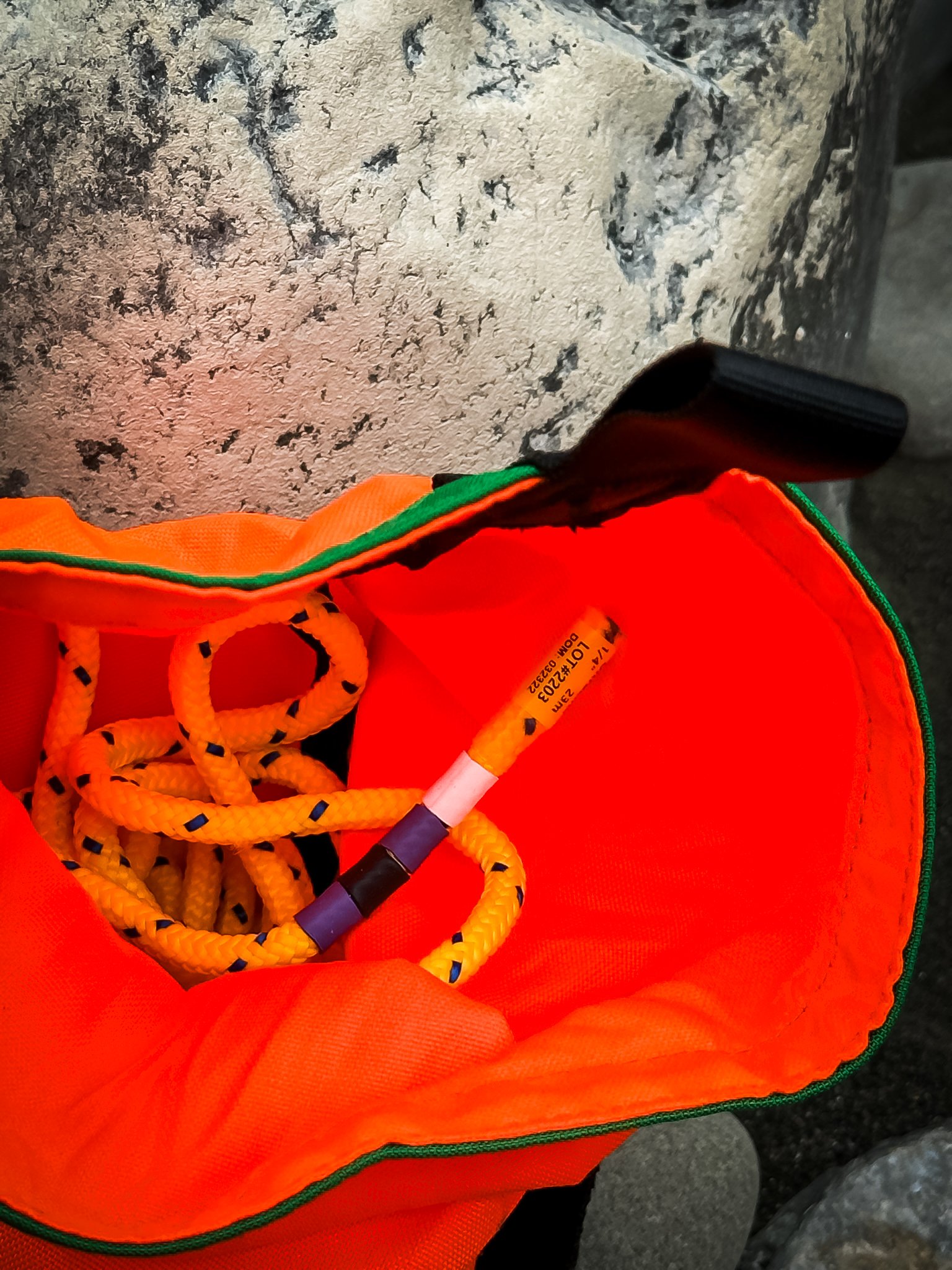
Arguments for having a knot are that you can see and locate the working end of the rope easily. You already have a loop enabling a quick connection with a carabiner. The knot is there and prevents the rope from sliding out of your or your swimmers hands.
Arguments against it are that if a rope gets loose the knot can chalk between rocks and cause an entrapment or create a hazard to other river users.
Arguments for having a clean end are that it is far less likely to get hung up between rocks. It only takes a few seconds to tie a connection knot if you practice. People are less inclined to connect the loop to the buckle which can lead to a hazardous situation of the rope unintentionally deploys.
Arguments against having no knot are that the rope can pull through your hands or the hands of a swimmer who has decreased dexterity from cold wet hands.
Knowing the pros and cons of a knot or no knot gives the opportunity to choose the appropriate configuration for your situation. If you are responding to or running rivers with more rocks and less water having a clean end on your rope may be a better choice to prevent entanglement. If you run or respond to bigger volume rivers with less rocks, having a knot on the end so you don’t get the rope pulled out of your hands may be the more appropriate choice. And you can always change the configuration to match the river you are at that day.
What are your thoughts on having a knot in the end of your throw bag?
Does the Type of Rope in a Throwbag Really Matter?

Throw bag rope types: Why are some throw bags so expensive?
There are a number of different throwbags and ropes to choose from. Your budget, the type of rivers you are running, and strength you need can help you decide the best option.
Rope type
To be effective and to reduce the risk of having a rope get stuck, river rescue rope needs to float. This is accomplished with materials having a specific gravity of less than 0(?). Polypropylene is a common material used, it is not expensive and floats but it is not a strong material, ropes that have an entire core made up of this are often less expensive but weaker.
Other materials are often used for the sheath and/or mixed in with the core to increase the strength of the rope. Spectra (Kevlar) and others are commonly used. These greatly increase the strength and durability but they add significantly to the cost.
For all types of ropes used in throwbags the larger the diameter, the greater the strength. In addition to being stronger, large diameter ropes are easier to grasp and see in the water. However larger diameter ropes can be harder to throw long distance accurately.
Smaller diameter ropes allow for smaller compact storage or longer length in comparable bags. They can be easier to throw accurately but are harder to grasp and can be more affected by the wind.
Another thing to consider is the sheath weave. Some manufacturers have changed the weave on the sheath altering the texture to improve the grip for both the rescuer and the victim.

If you are getting started and buying your first throwbag, you will have to weigh up the options compared to your budget. Our opinion is that spending the additional money for the higher quality rope pays off in the long run. These ropes tend to wear better lasting a longer time . Additionally because throwbags can be used for much more than just throwing to a swimmer, stronger rope is more versatile.
Check out our favorite Throwbag
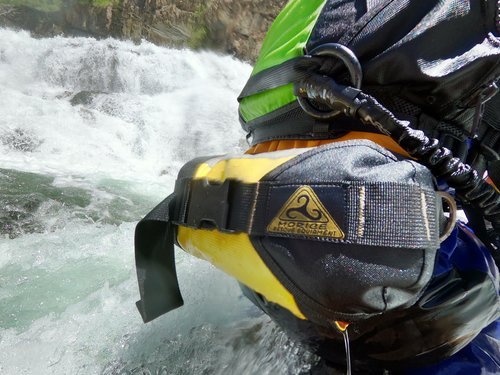
This is a two-piece throw bag, designed for a low profile while providing easy access to the 70-75 ft of either Sterling UltraLine or Bluewater Surgrip floating rope. The throw bag separates easily from the waist mounted belt holster to facilitate a quick response. A velcro closure provides easy access to the rope while eliminating the entanglement hazard created by drawcords. Interior closed cell foam provides flotation for the throw bag. Bright colors and reflective striping make the bag highly visible at night and in the water. The quick-release buckle on the belt allows for easy escape if needed.
The bag is outfitted with your choice of either:
75’ Sterling UltraLine floating rope 1/4” (6.5mm) diameter. This smaller diameter is good for longer, more accurate throws. This rope has a polypropylene sheath and Spectra core making it much stronger than similar size rope. Rated at 2495 lbs (11.1 kN) this throw rope can also be utilized in a variety of rescue applications.
70’ Bluewater Suregrip floating rope in the 1/4” (6.5mm) diameter. This rope has a polypropylene sheath and polypropylene core and is rated for 1000 lbs (4.4 kN). This rope has a sheath with different diameter bundles making the rope easier to grip.
The waist belt is adjustable to accommodate a wide range of people. The holster material is made from PVC fabric, similar to a raft, enabling it to stand up to abrasion and heavy use.
The Belt Pocket completes the system providing a place to safely store carabiners. It is a highly recommended addition (sold separately).
**Always remember to check your gear thoroughly before use**
Throw bags are manufactured in Chile by Morice Equipment.
Ropes are manufactured in USA by Sterling and Bluewater
Assembled in USA by Black Fox Rescue Institute.
Best Throwbag for Swiftwater and Whitewater Rafting

The belt/bag combo from Morice Equipment made huge improvements in successful throwbag throws for both our students and instructors. Here are a few of the reasons we love the Morice Throwbag.
Having a a bag that is always with you ensures there are no missed opportunities for a throwbag throw to a swimmer and improves odds of success because you can throw it to them sooner while they are closer to you.


Carrying the bag on your waist makes it much safer and far easier to swim with a throwbag to any spot on the river. Having it secured to your waist leaves both hands free for technical river scouts and access for rescue.
The bag holds 70’+ of our three ropes options , this ensures you have plenty of rope and expands your reach. This allows you to get your rope out to swimmers in a wide section or throw it across a river channel. The bag design allows for it to be quickly stuffed and reset, ensuring that you are ready to move quickly and be set for what ever comes up next.
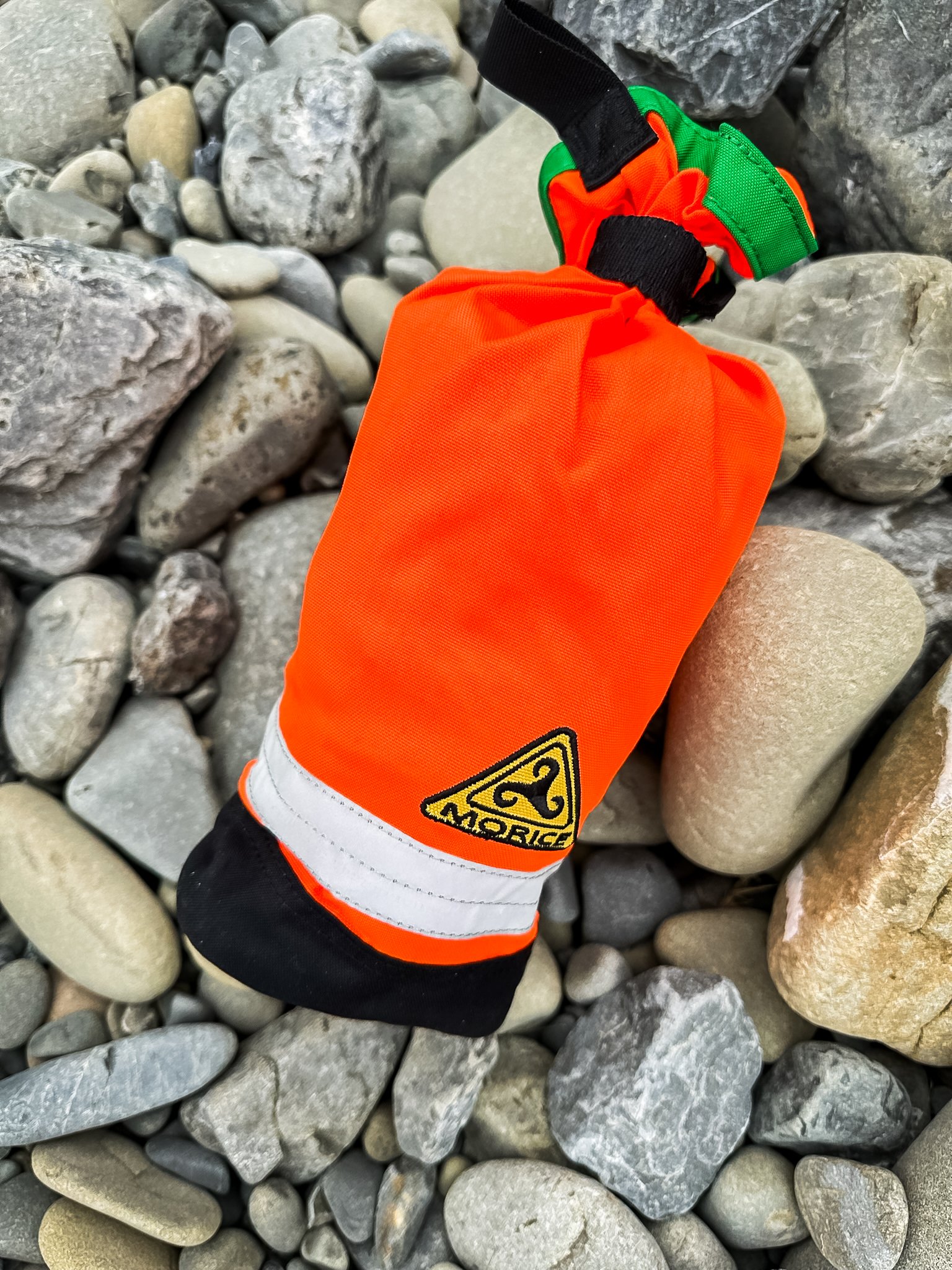
Best Throwing ThrowBag for Swiftwater Rescue
Combined with the Sterling Ultra Line these waist mounted throw bags throw full length and very accurately.
We first discovered Morice Equipment waist mounted throwbags while teaching swiftwater rescue in Costa Rica. Being river gear nerds, we had to try it out. Playing with it and getting our hands on it, the quality of workmanship was incredible and it functioned much better than other similar ones we have tried. Not being able to buy one at the time we reached out to the small company owned by Christian Morice to get one. He was great to work with with and as a river person great to talk to about all the amazing rivers he is and has run.
Once we got ours and used it for a couple of seasons we loved it so much we worked with Christian, to bring them in to the US!
Depending on your preference we have the ability to pack them with either Sterling or Bluewater ropes.

Having a solidly built throwbag that improves your odds of success when throwing in a dynamic swiftwater situation is huge!
We are stoked to be able to get them into your hands a bit more simply and quickly, and have them available to you here.